The Theory Of Acquired Rights Violates Hoppe's Specificity Principle

Listen to this article
Jake Desyllas

Hans-Herman Hoppe

Libertarians disagree about whether rights are inherent or acquired. In order to judge which theory of rights is valid, both theories must be evaluated against libertarian meta-ethical principles.

A fundamental principle of libertarian meta-ethics is that all property rights must be specific to individuals at definite points in time. This means that any property rule must provide a way to clearly identify the particular individual who has a property right and also provide a way to clearly identify the points in time when this right is valid. Let's call this The Specificity Principle.

Hans-Hermann Hoppe identified this principle. It is one of the meta-ethical principles of his framework of Argumentation Ethics. All the meta-ethical principles put forward by Hoppe in this framework have two key features:

  1. The principle must be accepted in argument, since it is logically derived from the act of argument itself and therefore is undeniable without contradiction:
  2. Any proposed property right is demonstrably unworkable a priori unless it conforms to the principle.

Hoppe showed how both these characteristics apply to the specificity principle:

Nobody can wait and suspend acting until everyone of an indeterminate class of late-comers happens to appear and agree to what one wants to do. Rather, insofar as a person finds himself alone, he must be able to act, to use, produce, consume goods straightaway, prior to any agreement with people who are simply not around yet (and perhaps never will be). And insofar as a person finds himself in the company of others and there is conflict over how to use a given scarce resource, he must be able to resolve the problem at a definite point in time with a definite number of people instead of having to wait unspecified periods of time for unspecified numbers of people. Simply in order to survive, then, which is a prerequisite to arguing in favor of or against anything, property rights cannot be conceived of as being timeless and nonspecific regarding the number of people concerned. Rather, they must necessarily be thought of as originating through acting at definite points in time for definite acting individuals.

- Hans-Hermann Hoppe, A Theory of Socialism and Capitalism

The theory of acquired rights is not specific about when a child becomes a self owner

According to the theory of acquired rights, humans only have rights when they possess some characteristic or ability that confers rights-worthiness. However, there is no consensus on what exactly the characteristic or capability is. This fails to comply with the specificity principle because the theory of acquired rights is not specific about when a child becomes a self owner.

The specificity principle states that one must be able to point to a specific owner of a property right at any given time. Yet the theory of acquired rights does not do this. Almost all leading proponents of the theory of acquired rights acknowledge that their theory is ambiguous about when an individual becomes a self owner.

The ambiguity is shown in the way that they defend abortion. Their argument is:

  1. Some abortions are not murder (because the child is not a self owner).
  2. Some abortions are murder (because the child is a self owner).
  3. There is not a clear boundary between these two categories.
  4. In any disputed case, someone will have to determine whether or not an abortion is justified (the theory of acquired rights does not provide an objective basis to answer this a priori).
  5. Therefore abortion is justified, unless someone determines that it is not.

This vagueness is not how rights work. A valid theory of rights is supposed to be deducible by the agents on the ground who are making moral decisions. Yet advocates of the theory of acquired rights are quite content to acknowledge that they don't know when a child becomes a self owner. Here are some examples.

Tibor Machan openly admitted that he doesn't know when an individual becomes "a human being":

Finally, something more must be said about the grey area of borderline cases. The best solution to this problem is probably to provide a forum for debate. Given the seriousness of what is at stake, the courts—the judicial system—would seem to be the appropriate forum. When someone believes that a planned abortion could involve the killing of a human being—for example, at a very late stage of pregnancy—it might be appropriate to ask for a hearing on the matter.

-The Morality of Non-Interference by Tibor Machan

Judith Jarvis Thompson, author of the most influential philosophical defence of abortion, openly conceded that some abortions are unjustifiable killings but failed to identify what determined the validity of any particular case. She defended abortion but abdicated all responsibility for providing a clear moral rule by breezily saying that there is "room for much discussion":

there are some cases in which the unborn person has a right to the use of its mother’s body, and therefore some cases in which abortion is unjust killing. There is room for much discussion and argument as to precisely which, if any. At any rate the argument certainly does not establish that all abortion is unjust killing.

-A Defense of Abortion by Judith Jarvis Thomson

Stephan Kinsella simply assumes that a zygote cannot have rights but that an unborn child in late pregnancy does have rights, but gives no rule as to how to determine when rights acquisition occurs:

it seems obvious to me that a one-day old zygote has no rights yet, even though it is a potential human person, and biologically a “human life.”It also seems obvious to me that infants have rights, so that infanticide is murder. And that there is little difference between late-term abortion and infanticide

- Legal Foundations of a Free Society by Stephan Kinsella

To make a valid property rule, you have to specify which individual holds the property right and identify the points in time when he has these rights. If you don't specify these things, you've done it wrong and your property rule is invalid. This is the case with the theory of acquired rights. The property rule "children come to own themselves at some point before birth but it is unclear when" is a badly-formulated and invalid property rule.

Advocates of the theory of acquired rights sometimes resort to the defence that it is not their fault that the start of personhood or rights is unspecific, this is merely a reflection of the nature of things. They argue that fetuses become rights-bearing individuals at some point, but there is no way to provide a clear cutoff since it is a gradual process that cannot be made into a binary in a non-arbitrary way. Therefore it is impossible to be specific about when the child becomes a self owner.

This is not true. The ambiguity in this theory is not imposed by nature, it is chosen. At least for some advocates, the choice seems to be the result of motivated reasoning. Whatever the reason, such ambiguity is objectively unnecessary since there is a valid formulation of rights theory that is unambiguous. It is possible to identify an objective point at which a child becomes a self owner. The theory of inherent rights does this.

The Theory of Inherent Rights Conforms To The Specificity Principle

According to the theory of inherent rights, individuals have rights from the moment they come into existence. Unlike the theory of acquired rights, there is no vague and unspecified transition between a parent "owning" a child and a child becoming a self owner. Every individual is a self owner from the moment he comes into existence without ambiguity.

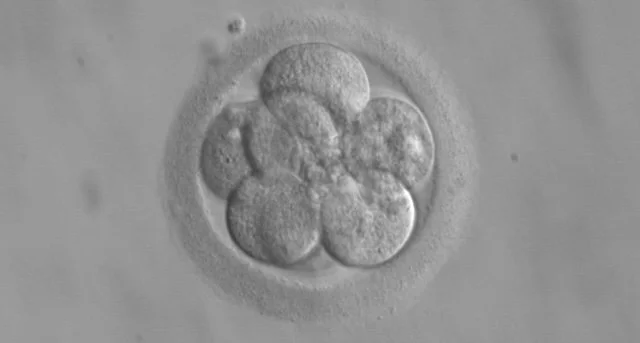
The theory of inherent rights provides an objective and definite temporal start to rights, and therefore is in compliance with Hoppe's specificity principle. The objective start is conception. As the philosopher Richard Werner pointed out, there is a non-arbitrary difference between two gametes prior to conception and a zygote after conception:

unlike the fetus immediately prior to birth and the baby immediately afterward, there is a significant and important difference between the ovum or sperm immediately before fertilization and the zygote immediately afterward. Given the proper environment the embryo, qua itself, is a growing developing organism. All things being equal, the zygote will grow into a person. On the other hand, the ovum or sperm qua itself is neither growing nor developing no matter what sort of environment one should find it, or put it into. A gamete will not, by itself, grow into anything other than what it already is— a gamete. In this sense it is inert and, thereby, nonhuman. A necessary condition of the ovum becoming human is that it begin to grow and develop into a person, that it be fertilized by a sperm cell. Otherwise, it remains inert never developing or growing into anything whatever and, as such, is no more a human being than is one of my red blood cells. Admittedly an acorn is not an oak, nor is an ovum or sperm cell human, but an acorn germinated in the soil is indeed an oak and so is the impregnated ovum a human.

- Abortion The Moral Status of the Unborn by Richard Werner

Of the competing libertarian rights theories, only the theory of inherent rights is consistent with libertarian meta-ethical principles. Therefore rights are inherent, not acquired.

A Critique of Rothbard's Theory Of Parental Ownership

Listen to this article
Jake Desyllas

Murray Rothbard

Self ownership is a central principle of libertarian philosophy. Individuals own themselves and this ownership right is inalienable. Therefore, individuals cannot be owned as property. If this is a principle, it applies in all cases. However, many libertarians are unclear on whether the principle applies to children, especially infants. Do babies own themselves?

A minority of libertarian writers have advocated the theory that parents own their children as property. Benjamin Tucker stated the idea bluntly:

the unemancipated child is the property of its mother, of which, by an obvious corollary, she may dispose as freely as she may dispose of any other property belonging to her.

This position is clear: babies are property in the same way that slaves are. This is a bizarre argument for a "libertarian" to make and most other libertarians rightly criticise it. One critic of this position was Murray Rothbard, who wrote:

It is grotesque to think that the parents can actually own the child’s body as well as physical property; it is advocating slavery and denying the fundamental right of self-ownership to permit such ownership of others, regardless of age.

Yet Rothbard himself advocated a version of parental ownership, contradicting his own argument that children cannot be owned. This article provides a critique of Rothbard's theory of parental ownership.

Rothbard's Conflicting Arguments on Parental Ownership

The reason Rothbard gives for parental ownership is that children cannot be self owners:

First, we may say that the parents—or rather the mother, who is the only certain and visible parent—as the creators of the baby become its owners. A newborn baby cannot be an existent self-owner in any sense. Therefore, either the mother or some other party or parties may be the baby’s owner

Why can't a baby be a self owner? Rothbard does not elaborate but his reasoning seems to be that their inability to exercise control means that they cannot be rightful owners. In Egalitarianism As A Revolt Against Nature, he argues that rights come from the power to use them and babies don't have this power:

It is evident that the baby has no de facto power of self-ownership; and since adult rights in natural law derive from adult powers and faculties, who does own the baby? … During the early years of babyhood, when the child is helpless and has few if any powers of self-ownership, he indeed becomes a kind of property of his creators, his parents.

The fact that babies are unable to control their bodies in anything more than a rudimentary way does not invalidate their legitimate ownership of their bodies. One must recognise the distinction between legitimate ownership and de facto control to have a theory of property rights. Without this distinction one is left with the belief that might is right. If someone steals my car, I am not capable of controlling the vehicle at all. Nonetheless I am still the rightful owner. Therefore Rothbard's argument that rightful ownership comes from de facto control must be incorrect.

To complicate matters, Rothbard also argues that babies have a right to self ownership:

In short, every baby, as soon as it is born and is therefore no longer contained within his mother's body, possesses the right of self-ownership by virtue of being a separate entity and a potential adult. It must therefore be illegal and a violation of the child's rights for a parent to aggress against his person by mutilating, torturing, murdering him, etc.

So we have four conflicting propositions from Rothbard:

  1. It is "grotesque" to think that the parents can own children
  2. A newborn baby cannot be an existent self-owner in any sense
  3. The mother is the rightful owner of the baby
  4. Babies possess the right of self-ownership

Why did Rothbard seem to contradict himself by arguing that babies cannot be self owners and also arguing that babies have a right to self ownership? I believe that what he was getting at in an unclear way is that babies are unable to exercise effective self ownership and therefore somebody else has to be their owner for their own good.

However, as already discussed, being unable to exercise control over your property right does not invalidate your right to it. Babies are self owners, even when they are helpless and incapable ones.

Individuals Cannot Be Homesteaded

Rothbard assumes that a baby is something that can be homesteaded. He refers to the mother as "its natural or “homesteading” owner". Why does the mother get to homestead the baby but the baby not get to homestead itself? If homesteading were the way that ownership of babies is allocated then the baby's lack of ability to control itself would explain why Rothbard thinks the mother does the homesteading. Here is Rothbard's line of reasoning:

  1. Property rights are allocated by the process of homesteading, whereby an individual takes ownership of a previously unowned resources through demonstrative physical acts. Examples of these demonstrative acts include physically taking hold of a resource or creating a border around it.
  2. Infants are incapable of homesteading something since they cannot demonstrate taking ownership through physical acts.
  3. Therefore infants cannot be property owners.
  4. Therefore infants cannot be self owners.

The implicit assumption in this argument is that homesteading is the method of establishing self ownership. But homesteading is not the only way to allocate property rights. Property rights are rightfully assigned to the person with the best objective link. For unowned physical objects, the best objective link is demonstrated by first-use homesteading. However, homesteading cannot be used to establish self ownership since the acts required for homesteading presuppose recognition of self ownership.

Each individual has the best objective link for ownership of their own body. This is the objective rule used for establishing self ownership. Babies own themselves because nobody else has a better objective claim to own them. The best objective link is not dependent on the capabilities of the baby. It doesn't matter if babies cannot yet argue a syllogism or advocate for their rights, they still have the objectively better claim to be the owners of their own body simply because they are the inhabitants of that body.

Furthermore, the idea of a mother owning a baby and then the baby acquiring ownership is logically flawed. You cannot acquire ownership of yourself because you cannot homestead anything unless you already have self ownership. So how is a baby supposed to acquire self ownership? Self ownership must be presumed from the get-go as the only non-contradictory basis for libertarian ethics. All other libertarian principles, such as homesteading, depend on the assumption of self-ownership. There is no way to come up with a non-contradictory account of an individual starting as property and becoming a self owner.

Rothbard's Two Models Of Limited Parental Ownership

Rothbard goes on to argue that although parents own their children, they only have a limited kind of ownership:

But surely the mother or parents may not receive the ownership of the child in absolute fee simple, because that would imply the bizarre state of affairs that a fifty-year old adult would be subject to the absolute and unquestioned jurisdiction of his seventy-year-old parent. So the parental property right must be limited in time. But it also must be limited in kind, for it surely would be grotesque for a libertarian who believes in the right of self-ownership to advocate the right of a parent to murder or torture his or her children. We must therefore state that, even from birth, the parental ownership is not absolute but of a "trustee" or guardianship kind.

This leaves a lot of open questions. Firstly, Rothbard mentions two possible analogies of the parental ownership role: trustee or guardian. He does not specify which, and there is a difference in the implications for self ownership.

A trustee holds legal title to the trust property, albeit not beneficial title. This means that a trustee does "own" the trust property legally, but this ownership is not absolute. This sounds exactly like the kind of limited ownership model that Rothbard is advocating. If the parent is a trustee, the implication for the question of ownership is indeed that the child is not a self owner. This model would explain why Rothbard thought that he needed to argue that parents own their children.

In contrast, guardians do not own the assets of their wards; they merely manage them on behalf of the ward. The ward retains ownership of his property, but the guardian has the authority to manage the property on his behalf and is obligated to act in the best interests of the ward. If the parent is a guardian, the implication for the question of ownership is that the child is a self owner. The child remains a self owner even while he is temporarily under the tutelage of the parent. This is an accurate characterisation of the parent child relationship, but if Rothbard was thinking of this model then he would not need to argue that parents own their children.

What Was Rothbard Trying To Achieve?

Rothbard had three conflicting goals in his theory of parental ownership:

  1. He wanted to protect the family from outside interference.
  2. He wanted a mechanism for parents to have authority over their children.
  3. At the same time, he wanted to deny enforceable parental obligations.

Despite denying parental obligations, Rothbard still wanted his theory to legitimate the relationship between natural parents and children. In developing his theory, he was addressing the problem of how to prevent others from taking children away from their parents. Since he also chose to argue that parents have no obligations to their children, he needed an alternative mechanism to bind the child to the parents. He uses parental property rights as the basis:

to assert that a third party can claim his “ownership” over the baby would give that person the right to seize the baby by force from its natural or “homesteading” owner, its mother. The mother, then, is the natural and rightful owner of the baby, and any attempt to seize the baby by force is an invasion of her property right.

Notice how, on Rothbard's account, the only victim in cases of child abduction is the parent (and not the child), since the crime is theft of parental property. On the contrary, when one recognises parental obligations, in child abduction cases the primary victim is the child, who is being kidnapped and deprived of his legitimate claim against his parents for care.

Rothbard also wanted to defend the concept of parental authority. The child liberation movement in the 1970s advocated the view that parents do not have any legitimate authority over their children. This is arguably the logical consequence of Rothbard's own theory of parenting as charity, but Rothbard himself saw the need for parental authority:

We see here the fundamental flaw in the progressive notion that parents should allow their young children unlimited freedom to do as they wish and not to "impose" training, values, or education on them. For the young child, still not in possession of knowledge, values, self-discipline, or much rationality, is hardly in a position to be able to decide what he should be doing or wishing. Failure to function as rational "authorities" or failure to provide that training and those values to the best of their ability, is a tragic abdication of the basic parental responsibility--which is not simply to provide food and shelter but also mental and moral training.

What justifies parental authority? Rothbard invoked parental ownership of the home as the primary basis of parental authority. Parents have the right to make rules for their children in the way that any property owner can make rules for those who occupy their property (in line with basic libertarian principles). But parental ownership of the child is another mechanism Rothbard appealed to in order to justify parental authority. For Rothbard, parental authority is derived from parental ownership of the child. It is a benefit of ownership. On the contrary, if one recognises parental obligations, then parental authority is a consequence of parental obligations. Parents may only use their authority to fulfil their obligations and the obligations provide both the justification and limit of that authority.

Parental Ownership Rights Are Merely Asserted

The hole in Rothbard's theory of limited parental ownership is that it lacks any justification. The right of parents to "homestead" a limited ownership of children is merely asserted. On what grounds did Rothbard believe that children come into the world as homesteadable property in waiting? This assertion contradicts the basic libertarian principle that individuals are self owners.

His reasoning seems to be this:

  1. Children are incapable.
  2. Therefore somebody has to take care of them.
  3. There could be conflicts over who takes care of a child.
  4. Therefore the role of parent is a scarce resource and is subject to the rules of homesteading.

But why should the helplessness of a child make them ownable property? Does the helplessness of an inveterate drug addict make him subject to ownership by someone else for his own good? If not, how does Rothbard differentiate between these cases? Rothbard is engaged in a circular argument that parents own children because children need to be owned by parents. To base a theory of parental ownership on the assumption that parents can own children is begging the question.

The Core Premise At Fault

Rothbard ended up arguing himself into this corner because of a faulty premise: he was determined to argue that parents have no obligations towards their children. If you start with this premise, it creates all these unresolved questions: who has responsibility for infants? Why shouldn't someone else be allowed to become the parent if the they want to? The theory of parental responsibility provides a clear answer to all these questions, and it all starts with parental obligation based on the action of parents putting children in a state of peril by creating them. Since Rothbard rejected parental obligation, he tried to resolve these questions with a convoluted theory of children as homesteadable property. It was incorrect.

The Correct Formulation Of The Parental Role

All of these problems are resolved if you drop the faulty premise that parents do not have obligations to their children. Here is the argument:

  1. By creating children, parents are responsible for their state of peril.
  2. Parents therefore have an obligation as a strict liability tort to remove their children from peril. This is achieved by doing whatever is necessary to raise them to become self-sufficient adults.
  3. In order to fulfil this obligation parents must take on the role of guardian. Children can only be saved from peril if parents fulfil this role. The guardianship role is not a homesteadable property right, it is an obligation resulting from creation of peril.
  4. Being a guardian involves fiduciary duty and the authority to act on the children's best interests. This includes the authority to coerce the child in limited and specific circumstances: each act of coercion is only justifiable if it is clearly in fulfilment of the best interests of the child.
  5. None of the this changes the status of children as self owners.

Children are self owners, even when they are babies. You are the rightful owner of yourself from the moment you are created.

What The Declaration of Independence Should Have Said

Listen to this article
Jake Desyllas

The US Declaration of Independence is one of the most influential documents in the history of libertarianism. The preamble has had a lasting impact on the philosophy of rights:

We hold these truths to be self-evident, that all men are created equal, that they are endowed by their Creator with certain unalienable Rights, that among these are Life, Liberty and the pursuit of Happiness.

However, the original text does not accurately reflect later developments in the libertarian conception of rights. If it did, it might read something like this:

We hold these truths to be self-evident, that all men are equally subject to universal law, that they have certain unalienable Rights, that among these are property rights to one's body and to anything acquired by homesteading or voluntary agreement, that opposing these rights is rationally indefensible.

Some notes on the original declaration:

  • It is not self-evident that all men are created equal since they are obviously not equal physically, in aptitude, in family circumstances, nor in numerous other ways. What is self-evident is the principle that regardless of the circumstances of their birth, they are equally subject to universal law.
  • Self ownership includes the right to one's life, since to damage a body is an assault on that person's property. Similarly, liberty is a derivative concept of self ownership.
  • The reference to happiness was a compromise (originally it was supposed to be property which is much clearer). Since every individual can be said to pursue happiness by definition, referring to the pursuit of happiness is either superfluous or irrelevant.
  • In referencing property instead of happiness, it is clearer to identify the legitimate sources of property rights: self ownership as the best objective link to the body, homesteading as the objective rule for new property, and voluntary agreement for everything else.
  • The reason something is self-evident is because it cannot be denied without contradiction. That was not quite true of the original preamble but is true for the suggested revision above.

Rights Cannot Be Based on Demonstrated Rationality

According to the theory of acquired rights, an individual starts life without rights and only qualifies for rights once he or she demonstrates some characteristic or ability. One of the many problems of this theory is defining the qualification criterion.

One version of the theory is that an individual has rights when he has the potential to be rational in future. As discussed in a previous post, this argument actually supports the theory of inherent rights, not acquired rights.

Another version of the theory holds that the qualification required to have rights is demonstrated rationality. As Stephan Kinsella puts it, "rights are bound up with human rationality and the capacity to understand, agree with and respect others’ rights".

The logical implication of this version of rights theory is that an individual acquires rights once he demonstrates rationality. Therefore, before an individual acquires rationality, he has no rights. This theory is logically indefensible for the reasons set out below.

It Permits Infanticide

If an individual's ability to reason is his qualification for rights, then children have no rights because children are not rational. A newborn baby cannot be said to demonstrate rationality any more than a newborn foal does. Children cannot be said to exhibit rationality until some significant period of time after birth, unless rationality is redefined so broadly that it would have to include all higher mammals (making the theory incoherent).

A norm of withholding rights until an individual demonstrates rationality would logically permit infanticide, since a newborn child cannot be said to demonstrate rationality. This implication is not one that most advocates of acquired rights theory are willing to accept, yet this must be accepted if one is to argue that children only qualify for rights once they demonstrate rationality. Most advocates of the theory choose to ignore this implication and thereby contradict themselves. Occasionally, one chooses to accept the reductio and make an absurd "libertarian" case for infanticide.

It Is a Conflict-Generating Norm

A norm of respecting rights only once an individual has demonstrated any capability would lead to conflict, and is therefore an invalid norm. It is invalid as a moral rule because of the presumption of rights: you can't demand proof that someone deserves rights, you must presume they do until proven otherwise.

It Is a Non-Universal Norm

Any rule for withholding rights until a specific capability is demonstrated breaks the universality requirement of norms as inter-subjectively ascertainable based on relation of person to physical thing. This is another reason that it is invalid as a moral rule.

The failure of a norm to comply with the universality requirement always has disastrous implications. In this case, the idea of rationality as the qualification for an individual's rights implies justification of class rule by a self-declared elite who may judge the rights-worthiness of others (i.e. the self-declared rational judging whether others meet their definition of rational).

Reason Is Intermittent, Rights Are Not

Reason is by nature an intermittent capacity, so basing rights on demonstrated rationality logically entails removing rights from everyone at numerous points in their lives, or else the theory requires an endless list of arbitrary exceptions. Does someone lose their rights whilst asleep? Does someone lose their rights whilst intoxicated? What about if they are in a coma? People in all these cases fail to demonstrate rationality, so the theory would deprive them of their rights or else fall into a mess of contradictions.

Conclusion

Although reason does play an important role in determining the scope of rights, demonstrated rationality cannot be a criterion for rights. The correct role for reason in rights theory is in the theory of inherent rights, described here.

A Child's Potential for Rationality in Future Is an Argument for Inherent Rights

As discussed in a previous post, the theory of acquired rights asserts that a child qualifies as a rights-bearing person once he or she demonstrates possession of some characteristic or ability that confers rights-worthiness.

One version of this theory argues that when a child has the potential to be capable of reasoning at some point in the future, he qualifies for rights. Whatever this argument's merits, it does not support the theory of acquired rights. If rights are based on a child's future capacity to reason, then rights are inherent, not acquired.

If rights come from the potential to reason in future and not from the ability to reason now, then the current characteristics and abilities of the child are irrelevant. It does not matter what a child looks like or can do at present, since this argument for rights is based entirely on something that a child could potentially do in future. The logical implication of this argument is that a child has rights from the moment he comes into existence, since from that moment onwards there is the potential of a future in which the child is capable of reasoning.

Advocates of the theory of acquired rights refuse to accept this logical implication. They attempt to argue that an unborn child only has rights once it reaches certain developmental milestones that are related to a future ability to reason, but not before it has reached those milestones. For example, Jason Sorens argues that an unborn child only acquires rights at six and a half months because at that point the child has various features including "a recognizably human brain" which gives it the "potential for rationality".

However, any arbitrary milestone is completely irrelevant to the basic premise of the argument. As a reminder, the argument is that a child has rights despite his current inability to reason. Rather, he has them because he has the potential to reason in future. The logical implication is that rights are valid from the moment of conception, not from any point in brain development, since from the moment of conception a child is unable to reason but has the potential to reason in future. There is no philosophical basis for arguing that a child acquires rights because of any developmental milestone if that milestone isn't actually changing the child from a non-reasoner to a reasoner.

Advocates of this version of the theory of acquired rights are trying to argue that the potential for reasoning in future is a valid criterion for rights, but it should only be taken into account once some arbitrary developmental milestone has been reached by a child. The entire endeavour is nonsensical. It appears to be motivated reasoning with a particular conclusion in mind: to set aside a window of time in which a child does not have rights so that abortion is not considered a rights violation.